
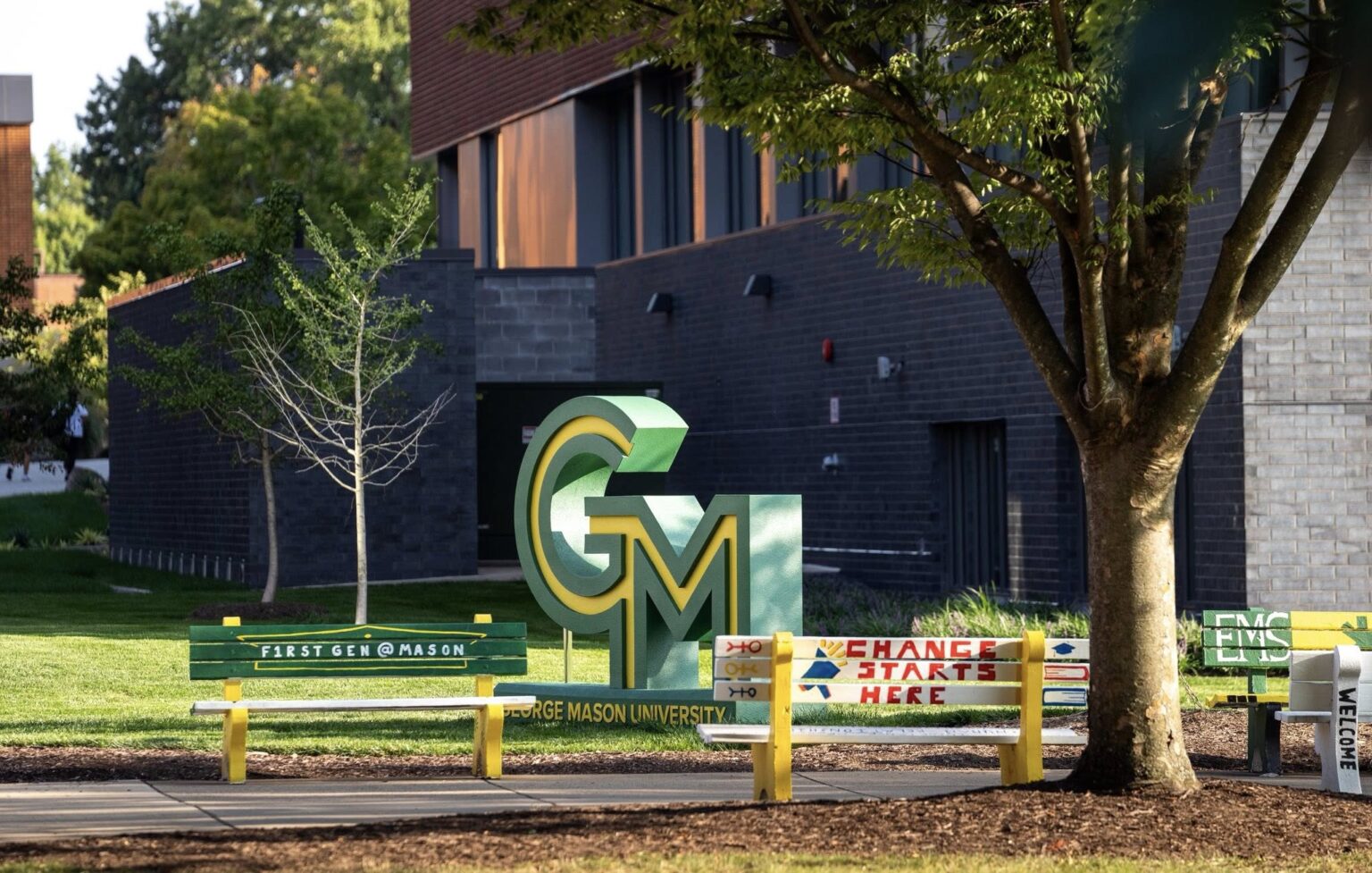
Amid a federal crackdown on DEI initiatives nationwide, George Mason University joins others as it faces a DOJ investigation targeting the university’s diversity programs and its faculty for alleged discrimination.

For virtually seven decades, George Mason University (GMU) has harbored a reputation for academic excellence and local autonomy, peacefully existing as one of Virginia’s top public institutions.
Recently, however, the university has become entangled in a broader web of national controversy affecting universities nationwide. With the Trump administration intensifying scrutiny of higher education institutions like Columbia University and Harvard University, national attention has now turned toward GMU.
A recent faculty resolution created by GMU staff has sparked the interest of the Department of Justice (DOJ), signaling an expansion of the Trump administration’s campaign against what it perceives as left-leaning environments on university campuses.
A Faculty Resolution That Brought Chaos
In response to a DOJ investigation into GMU’s diversity programs, which are allegedly discriminatory in violation of Title VII regulations, numerous faculty members began collaborating to express their outrage.
Just days after the investigation was launched, professors published a faculty resolution supporting GMU President Gregory Washington for the university’s continued support for diversity on campus.
Much to the surprise and anger of GMU staff, the DOJ announced on July 29, 2025, that they would investigate faculty too due to their oversight over GMU’s diversity. Specifically, such an announcement gave the administration the ability to seek drafts of the faculty resolution, all written communications among the Faculty Senate members who had drafted the resolution, and all communications between those faculty members and the GMU President Gregory Washington.
Critics quickly responded against the DOJ, arguing that academic freedom and free speech were threatened by this overbearing decision. With a letter of support provoking such a crisis, numerous organizations and individuals believed that the administration had disrespected the faculty’s rights to govern their institutions without fear of being punished or of political interference.
For instance, Todd Wolfson, President of the American Association of University Professors (AAUP), called such an investigation “a gross misuse of federal power to chill speech, silence faculty members, and undermine shared governance”.
Furthermore, Wolfson said, “It is an attack on academic freedom, plain and simple.”
Meanwhile, proponents of the investigation argued that it praised the university’s unjust actions to diversify faculty and staff.
Specifically, Harmeet Dhillon, Assistant Attorney General of the DOJ’s Civil Rights division, said, “[The resolution] indicates the GMU Faculty Senate is praising President Washington for engaging in race- or sex-motivated hiring decisions to achieve specific demographic outcomes among faculty and staff.”
How Title VII Became a Catalyst for Conflict
Universities across the country are facing similar situations to GMU, with numerous investigations stemming from Title VII.
Enacted in the Civil Rights Act of 1964, Title VII prohibits discrimination based on race, color, religion, sex, and national origin. Recently, this provision has become a major topic of discussion, particularly in universities and workplaces. Under Trump’s administration, such a provision has been applied narrowly and conservatively, with many diversity programs being accused of discrimination. Precisely, the Department of Justice and the Equal Employment Opportunity Commission (EEOC) underscore that a university that considers any such factors in faculty hiring processes is violating Title VII, warranting further investigation.
With this, “diversity, equity, and inclusion” (DEI) programs have been limited as the administration views them as promoting “reverse discrimination” in education and governmental workplaces. Furthermore, Title VII interpretations have sparked debate over affirmative action, arguing likewise that diversity programs based on race or sex could be a violation of anti-discrimination legislation.
On July 17, 2025, the Department of Justice’s Civil Rights Division launched an investigation into GMU’s employment practices, questioning whether race and sex influenced faculty hiring, promotion, and tenure decisions under Title VII.
In trying to prevent alleged “reverse discrimination”, the examination looks into whether faculty resolutions encourage hiring practices or policies that directly or unintentionally violate Title VII regulations.
Specifically, the DOJ will look thoroughly into the university’s policies and programs, examining whether the university encourages the hiring and promotion of women and people of color in the faculty. Moreover, it will look into Dr. Washington’s promotion of these policies.
Looking further into possible Title VII violations, government officials have also accused GMU of having antisemitism problems on campus that have not been addressed sufficiently.
George Mason University is not the only one accused of discriminatory diversity policies, however. Columbia University was another university on the administration’s list of colleges that were to be investigated amid the federal government’s crackdown on antisemitism on college campuses. To do so, the EEOC sent texts to Columbia and Barnard faculty asking them to complete a survey for a Title VII investigation. The survey had asked about workplace harassment based on religion, potentially foreshadowing further conflict.
Moreover, just a month before GMU faculty was investigated, Harvard University was also targeted for having “multiple hiring and training programs at Harvard that seem to discriminate.” President of Harvard Alan Garber had received a letter, similar to the letter received by GMU staff, in which Education and Workforce Committee Chairman Tim Walberg (R-MI) had requested information about whether the school partakes in any illegal, discriminatory hiring and employment practices in violation of Title VII.
What Diversity Means to GMU
Amid the impending investigation, its significance extends to both staff and students. Diversity is central to George Mason University’s identity and a key reason many applicants are drawn to the school. GMU prides itself on being “Virginia’s largest and most diverse public university.”
In fact, according to U.S. News, 59% of GMU’s student body identifies as a minority. With a majority of students potentially affected by accusations of the university’s “discriminatory policies,” the investigation could significantly impact the experiences of current and future students alike.
The state of Virginia, as a whole, which is home to a number of the nation’s top universities, has been featured in numerous news stories with similar stories. In June, James E. Ryan stepped down as president of the University of Virginia, facing mounting pressure from the Trump administration and the Jefferson Council, a conservative alumni group. Other leaders at public colleges in Virginia who championed diversity initiatives have also lost their positions this year.
Therefore, such a crisis extends far beyond GMU. Campuses across Virginia and the nation have voiced fears that their institutions could be next, as part of a nationwide effort by the Trump administration to dismantle diversity programs under the guise of enforcing Title VII.
As diversity programs are stripped away and campuses face mounting political pressure, one question echoes and incites fear: Who’s next?

Leave a Reply